
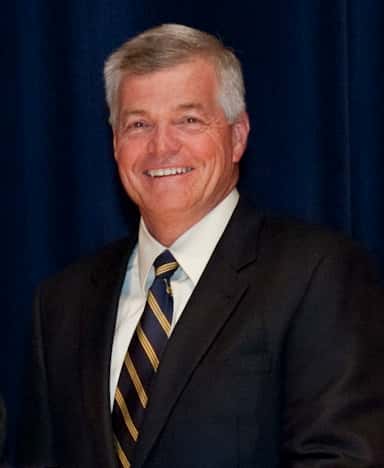
Joseph Francis Fraumeni, Jr.
April 1, 1933 – June 22, 2026Age 93
Medical researcher and epidemiologist
Bethesda, Maryland
Joseph F. Fraumeni Jr., the epidemiologist who spent his career chasing the genetic roots of cancer, passed away at 93.
Obituary
Joseph Francis Fraumeni Jr. spent his early career at the National Cancer Institute, working tirelessly to detect how cancer spreads through families, and it changed how people view cancer forever. He passed away at 93 on June 22, 2026, and the cause of his death remains undisclosed. The death was announced by Joseph Gawler’s Sons Funeral Home, based in Washington, D.C., and the Catholic Funeral Mass is scheduled for 29th June at the Church of the Little Flower in Bethesda, Maryland.
Fraumeni was born in 1933 in Everett, Massachusetts, as the firstborn son of Pauline Malta Fraumeni and Joseph Francis Fraumeni Sr., who represented an Italian-American connection. He was known for his intellect and wisdom, but even more so for his ability to lighten up gatherings, merely through his presence. Those close to him affectionately gave him the nickname ‘Skippy.’
The educational career of Fraumeni represents a distinguished pathway, with him receiving the A.B. from Harvard College. Fraumeni went on to receive an M.D. from Duke University, followed by an M.Sc. in Epidemiology from the Harvard School of Public Health. He completed his medical residency at Johns Hopkins Hospital and the Memorial Sloan-Kettering Cancer Center, which paved the way for his appointment to the Epidemiology Branch at the National Cancer Institute (NCI). Fraumeni was commissioned as a public health officer in the US Public Health Service in 1962. He would go on to serve the institute for more than five decades.
In 1966, he rose to head the Ecology Studies Section, a position he held due to his hard work during his stint as an officer. By 1969, he identified a rare syndrome that could cause multiple cancers, such as breast cancer, sarcomas, and brain tumors. This identification came while he was working with his fellow researcher, Frederick P. Li, who observed this trend in young people across different families. These families were traced over the next two decades, leading to collaborative molecular studies that revealed the inherited mutations in the TP53 tumor suppressor gene. The identified syndrome was named the Li-Fraumeni Syndrome. Extensive studies have been undertaken, advancing research in oncology, clinical screening, and genetics.
The importance of that finding is hard to overstate. Li and Fraumeni had shown that a single inherited factor could predispose a family to an entire spectrum of cancers, an idea that cut against the prevailing view of cancer as largely a matter of chance and exposure. When germline mutations in the TP53 gene were identified as the underlying cause in 1990, they confirmed at the molecular level what the family histories had implied two decades earlier. TP53, often called the “guardian of the genome,” would go on to become the most frequently mutated gene in all of human cancer, altered in roughly half of tumors. The rare families Fraumeni first studied had pointed the way to one of the central genes in oncology.
His family-by-family tracking and the identification of a rare syndrome helped him land the position of Chief of the Environmental Epidemiology Branch. Fraumeni led the development of the first computer-generated map, which depicted cancer mortality across the US by region in 1975. This initiative uncovered the undetected exposures that drove malignancies such as lung, oral, and bladder cancers. By uncovering these exposures, the program introduced effective preventive measures in high-risk populations. This program was the first of its kind in public health and was also applied in China to identify high-mortality regions for esophageal, gastric, and lung cancers, as well as other cancers.
The novelty and impact of this program strengthened his case for the Director of the Epidemiology and Biostatistics Program position in 1979. His rich body of work and achievements helped launch a whole new division to study the genetic and environmental roots of different cancers, and he became the Founding Director of the Division of Cancer Epidemiology and Genetics in 1995. In 2014, the NCI Division of Cancer Epidemiology and Genetics organized a scientific symposium named “Cancer Epidemiology: From Pedigrees to Populations” to honor 50 years of his leadership. Fraumeni retired in 2017 and was recognized as a Scientist Emeritus. At the NIH, a conference room was named in his honor as the “Joseph F. Fraumeni, Jr. Conference Room.”
Fraumeni authored and co-authored over 900 scientific publications throughout his career. He served as a co-editor with David Schottenfeld for Cancer Epidemiology and Prevention in its first three editions, which were published by Oxford University Press and remain the go-to reference text in this field.
He received countless accolades during his career, which include:
- Abraham Lilienfeld Award from the American College of Epidemiology
- John Snow Award from the American Public Health Association
- James D. Bruce Award from the American College of Physicians
- Nathan Davis Award from the American Medical Association
- Charles S. Mott Prize from the General Motors Cancer Research Foundation
- Medal of Honor from both the International Agency for Research on Cancer and the American Cancer Society
- Lifetime Achievement Award from the American Association for Cancer Research.
The American Society of Preventive Oncology paid its tribute to Fraumeni by renaming its Distinguished Career Achievement Award in his honor. He served as an elected member of many distinguished academies and associations, including the National Academy of Sciences, the National Academy of Medicine, the Association of American Physicians, and the American Academy of Arts and Sciences.
Taken together, the two strands of his career trace the shape of modern cancer epidemiology. In the Li-Fraumeni families, he followed cancer down to a single inherited gene; in the national cancer mortality atlas, he tracked it across an entire population. The field he helped build, embodied in the division he founded, depends on moving between those two scales, from the pedigree to the population. The symposium that marked fifty years of his leadership was titled, fittingly, “Cancer Epidemiology: From Pedigrees to Populations.”
His work did not stay in the laboratory. Because the syndrome that carries his name can now be confirmed with a genetic test, families who carry a TP53 mutation can be offered close monitoring instead of being left to wait for symptoms. Surveillance built around regular whole-body and brain MRI, most widely known as the “Toronto Protocol,” has been shown to catch tumors early and improve survival among people with the syndrome. The patient and research community that has grown up around the condition, including the Li-Fraumeni Syndrome Association, traces its work back to a pattern two physicians first noticed in a handful of families in 1969.
Fraumeni was preceded in death by his wife of 49 years, Patricia D'Arcy Fraumeni, and is survived by his brother, Arthur Fraumeni. The family has asked for all donations to be directed to the Li-Fraumeni Syndrome Association.
On one hand, Fraumeni was a scientific master who decoded a deadly mystery, changing the course of cancer research; on the other hand, to his family, he was always ‘Skippy,’ the man who could light up a room in the blink of an eye. He will be remembered for the syndrome he decoded, the awards he received, and the conference room named in his honor, honoring his mastery.

Sources & references

A Living Tribute
A grove beginsin memory of Joseph Francis Fraumeni, Jr..
Real trees, planted in their name in verified reforestation sites, a quiet, growing record of remembrance.
From $19·Verified reforestation sites
Stay in touch
Follow Joseph Francis Fraumeni, Jr.’s memorial.
We’ll send you a gentle note when new remembrances or trees are added. No more than one email a day, and nothing else.
Continue Reading
More lives remembered.
 Business
1927 – 2026 · Chicago, Illinois
George E. Johnson Sr.
George E. Johnson Sr. turned a barber's burning-scalp problem into Ultra Sheen and Afro Sheen and built Johnson Products Company into the first Black-owned business to trade on the American Stock Exchange. He died July 6, 2026, at the age of 99.
 Politics
1946 – 2026 · Philadelphia, Pennsylvania
Shirley M. Kitchen
Shirley Kitchen, the North Philadelphia social worker who became the second African American woman to serve in the Pennsylvania Senate and held her seat for two decades before hand-picking her own successor, died July 5, 2026, at the age of 79.
 Politics
1956 – 2026 · Shelbyville, Tennessee
Jim Tracy
Jim Tracy, the Tennessee Republican who spent more than a decade in the state Senate and lost a 2014 Republican primary for Congress by 38 votes, then declined to contest it, died July 3, 2026, at the age of 69.